
1. Job Duties and Responsibilities
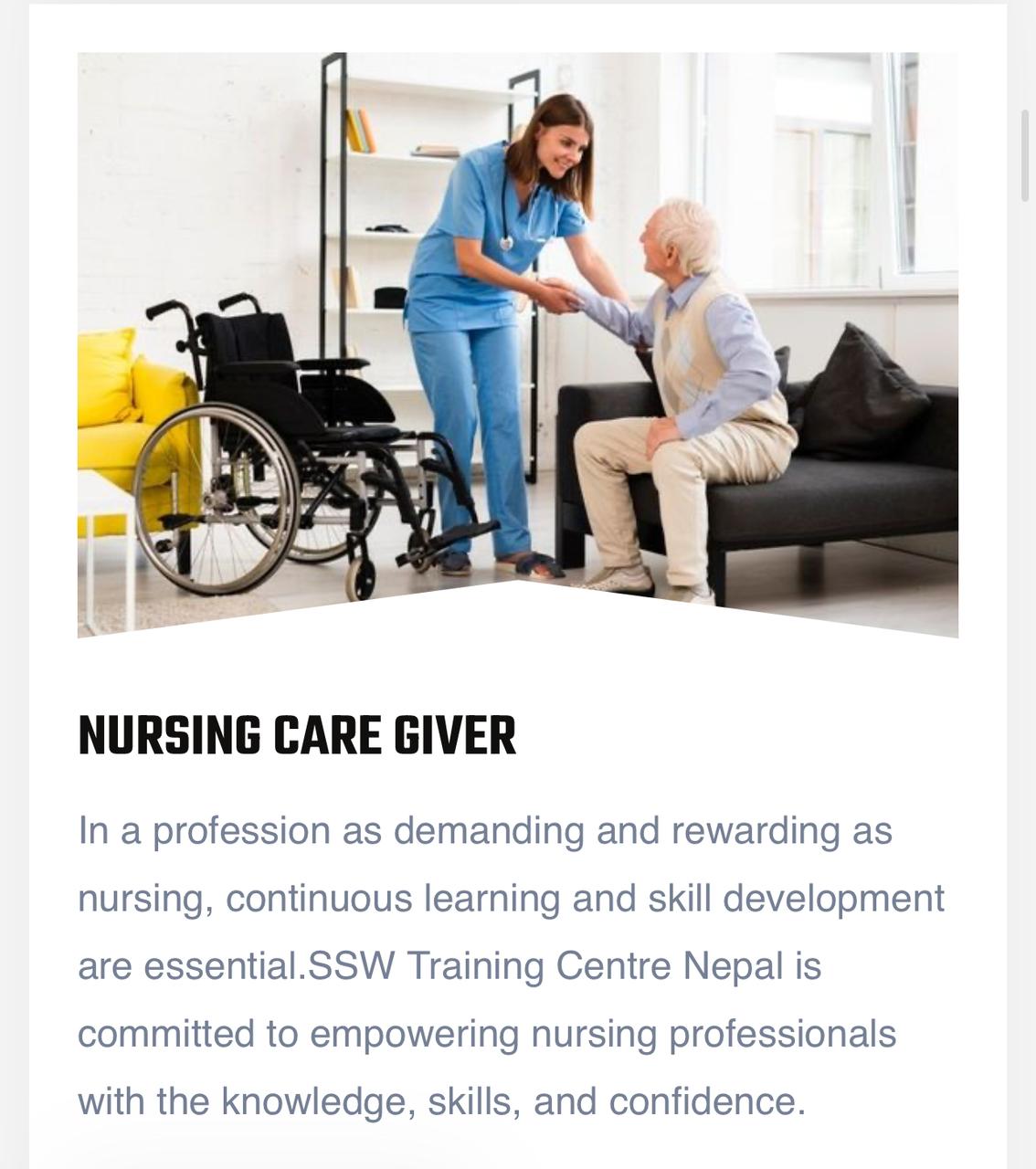
At a very baseline level, it is important to note that job responsibilities and tasks differ greatly for nurses and caregivers.
A caregiver does not perform any medical duties for their clients. Typically, a caregiver will assist patients who need minimal care.
Instead, they provide care in a variety of other tasks, such as dressing, cooking, cleaning, hygiene, and even running errands.
The caregiver adds companionship and assistance in the day-to-day life of their client without offering explicit medical care.
On the other hand, a licensed and certified nurse can accomplish all of a caregiver’s tasks and provide medical care.
While a nurse will not provide a diagnosis or perform any particular treatment without a physician’s documented clearing, a nurse can measure a patient’s vitals, and provide medication management, wound care, and hospice care.
With a doctor’s approval, a nurse can also complete tasks such as medical injections and IV therapy.
In addition, nurses can provide assessments and be an advocate on your behalf when presenting information to your physician.
Summary: Caregivers may provide assistance with daily tasks, chores, and errands but cannot complete medical duties. Nurses can provide these daily tasks and complete medical duties with a doctor’s approval.
2. Training and Education
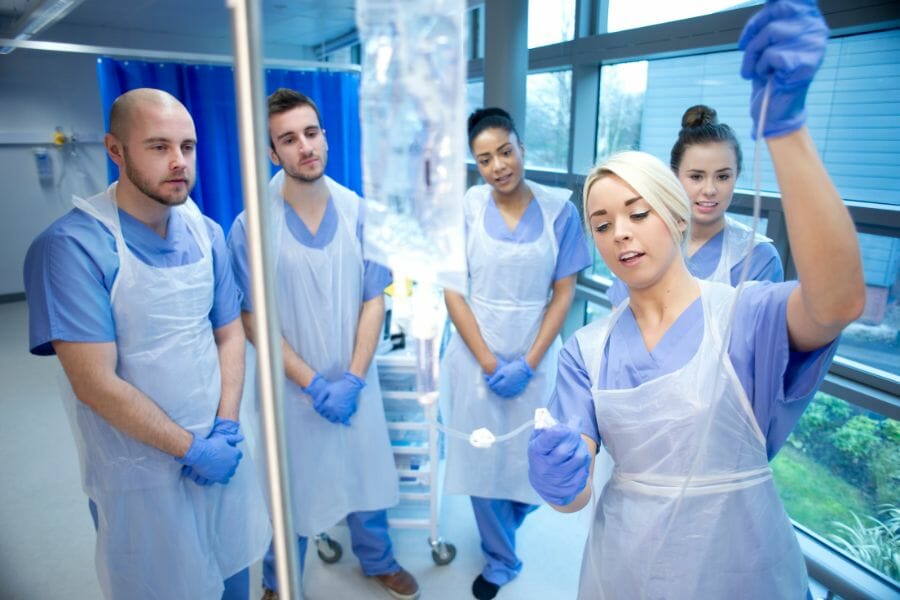
Particular training is subject to specific states, but most caregiving requires 40 hours of training. This involves first aid skills and how to successfully perform CPR.
Additionally, caregivers may learn safety protocols that protect their patients during daily tasks such as walking, bathing, and eating.
To become a caregiver in California, you must:
- Take an online training course that meets the California 10-hour and 5-hour training guidelines (this can be completed online)
- Show confirmation that you took the course and then passed the exam
- Register your name and all training information with the state of California
Nurses, both RNs and LVNs, must go through extensive training and certification to provide expert medical care.
When attending nursing school, prospects have options such as:
- Associate Degree in Nursing (ADA) – 2 to 3 years
- Bachelor of Science in Nursing (BSN) – 4 years
- Entry Level Masters Program in Nursing (ELM) – additional 1 to 2 years
To obtain an RN in California, a prospective nurse must meet all education requirements, pass a criminal background check, and pass the national licensing exam.
In addition to completing the initial training and certification, nurses must also recertify their license every two years.
In California, RNs must complete 30 hours of continuing education to maintain an active license and LVNs must complete 30 contact hours of continuing education every 3 years to renew their license with an active status.
Summary: Caregiving requires 40 hours, or more, of training such as CPR training and safety protocols. Nurses must attend nursing school to earn their Associate, Bachelor, or Masters degree and complete a national licensing exam. Continuing education and license renewal are critical for nurses, as well.
3. Work Opportunities
For the most part, caregivers find themselves working in clients’ homes where they can provide the non-medical assistance that these patients need—particularly our senior population.
Again, this involves assistance with activities of daily living (ADLs) such as walking, cleaning, bathing, and eating.
Registered nurses can work in a variety of settings. RNs and LVNs may work in:
- Hospitals
- Client homes
- Skilled nursing facilities/nursing homes
- Hospice centers
- Surgery centers
- Eating disorder centers
- Drug and alcohol rehab facilities
- Schools
- Psychiatric facilities
- Infusion pharmacies
Due to being able to provide medical care and the additional education and training, nurses have significantly more work opportunities than caregivers, especially per diem nurses.
However, it is also important to note that the barrier to entry is much more difficult for RNs and LVNs compared to caregivers.
Summary: Caregivers often work in their client’s homes and offer assistance with daily tasks. Nurses find themselves in a multitude of work environments, such as hospitals, client homes, skilled nursing facilities, medical centers, and more.